Underestimated moments: Why breaks are the key to even more successful events
Published on July 15, 2025

Despite high-profile speakers and flawless technology, the most memorable part of many events often shifts to the edges of the program: the break. A 2022 study by the Lucerne University of Applied Sciences and Arts shows that 64 percent of event participants rate informal conversations as "particularly valuable." So why is this area often neglected during planning? And what actually makes a good break? This article offers a few insights.
Atmosphere beats agenda: What people really need during breaks
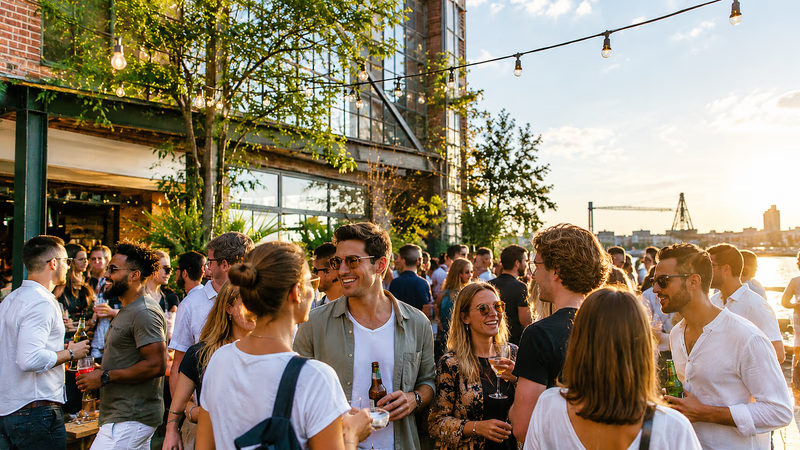
Conference attendees, workshop guests, or wedding parties all share one thing: the longing for real break moments. Not just program gaps, but intentionally designed intervals. Spaces where people can talk, reflect, enjoy, and briefly switch off. While organizers often spend hours refining the schedule, the break area is frequently improvised. A few standing tables, thermoses, and cookies no longer suffice.
Small details make a big difference. Seating that invites relaxation. Music that accompanies rather than overwhelms. Lighting that calms instead of glaring. And one often underestimated element: the quality of the refreshments. A careless setup misses opportunities. The aromatic scent of freshly ground coffee beans-not the metallic smell of vending machine coffee-can noticeably lift the mood. Studies by the German Coffee Association confirm that our sense of smell is strongly linked to memory and emotion. Cutting corners on quality is cutting corners on impact.
The underestimated networking booster: Social closeness doesn't happen on stage
Presentations convey content. Breaks build relationships. This distinction is essential-and yet far too often overlooked in event planning. A 2021 study by Fraunhofer IAO found that 78 percent of initial business connections at events occur not during official sessions, but in informal break moments. These seemingly peripheral moments are, in truth, the social engine of an event.
Many organizers mistakenly see breaks as functional voids. A coffee spot, a few standing tables, maybe a lonely roll-up banner-and that's it. But real networking doesn't come from mere presence. It comes from well-orchestrated opportunities. People need cues that they are welcome to connect. Without these, conversations remain superficial-or never start at all.
Structure creates opportunities for connection
Effective networking moments need a framework-from spatial design to content prompts. Themed tables with clear keywords like "Sustainability in Events," "Digital Tools," or "Local Supply Chains" naturally spark conversation, without forced facilitation.
Designated hosts also help. Staff or volunteers who approach guests, introduce people, and build connections act as social bridges. While it may seem unfamiliar at first, it reliably energizes the room. Tools like conversation prompt cards on tables ("What's been your highlight so far?" or "What are you looking forward to next?") can lower the threshold for interaction. Especially effective are ritual formats: welcome cafés at the start, moderated lunch buddies, or afternoon networking walks. These give informal moments structure without making them feel forced.
Breaks as emotional batteries: Why rest increases productivity
Between two presentations, it may only be ten minutes-but those ten minutes decide whether content is processed or lost in the noise. Modern neuroscience is clear: without consciously designed breaks, cognitive capacity drops rapidly. A 2020 long-term study by the University of Zurich showed that participants who took a calm, low-stimulus break between input phases retained 42 percent more content than those who had breaks in hectic environments.
Breaks are not a luxury-they're a prerequisite for effectiveness. So what does this mean for planners? Recovery spaces don't have to be meditative but need a clear function: to allow retreat. A quiet seating corner with natural light, soft music, and no agenda is practical, not esoteric. Combining digital relief with analog spaces-such as a designated "offline zone"-can offer valuable downtime.
Break spaces with story: How design becomes part of the brand message
Every location has an impact-but it's never accidental. Intentional design turns a space into a stage for brand communication. Event planners should curate not just the program but also the break area with strategy. Because where words stop, everything else speaks: light, materials, temperature, sound. These in-between spaces determine whether guests feel welcome, inspired, or just processed.
The break area is not a logistical necessity. It reflects the organizer's attitude toward their guests. It quietly reveals whether a brand stands for quality, efficiency, sustainability, or creativity-and that impression sticks. Especially when the message aligns with the emotional experience of the break: relief, clarity, calm.
Quiet statements with lasting impact
Design is communication-even in the break area. Natural materials quietly suggest ecological responsibility. Soft fabrics and warm light say: you can breathe here. Cold gloss surfaces, harsh lighting, and stale air signal detachment, harshness, or carelessness. Every design choice communicates-not through text, but through values.
Scent plays a role too. A 2019 study from the University of Bern shows that smells have a direct impact on well-being and memory. Citrus energizes. Lavender calms. The familiar scent of fresh coffee-subtle, premium, comforting-can anchor your event in the guest's mind. These are the moments that get shared on LinkedIn or talked about with colleagues. Underestimating them is missing out on communication potential.
Truly inclusive: Why breaks must be reimagined for accessibility
Events aim to connect-but many break setups unintentionally exclude. Those in wheelchairs, those with hearing difficulties, introverts, or people with limited language skills often struggle in standard break environments. Tight corridors with standing tables, in-jokes in small talk circles, or buffet stations lacking orientation can make participation difficult.
Accessibility isn't just technical-it starts with spatial layout and ends with communication. Inclusive breaks create eye-level encounters, both literally and figuratively. Seating at different heights, clear signage, quiet zones for sensory sensitivity, and simple language on signs make a real difference.
Sustainable breaks: Why smart planning conserves resources
One often overlooked aspect of sustainable breaks is product selection-not just what is consumed, but how. Coffee is central to most breaks-and the differences lie in the details. Industrial capsules and cheap blends create packaging waste and obscure supply chains. High-quality whole beans, however, offer multiple advantages.
First: fair-trade, direct-sourced coffee supports local producers and transparent value creation. Providers like Kaffeepadsonline.ch offer whole beans with traceable origins-an alternative to anonymous mass products. Second: whole beans are more resource-efficient than capsules or pods, as they avoid aluminum and individual packaging-especially important for high volumes. Third: fresh preparation using professional machines improves both sustainability and sensory experience.
Stimulus reduction as strategy: Why not all breaks should look the same
Not all breaks are equal-nor should they be. Different times of day require different energies. A break after a technical panel requires a different setup than one before a creative brainstorm. This nuance is often missed: many events offer the same type of break at the same time, ignoring participants' emotional rhythms.
Reducing stimuli is key. The denser the content, the more decompression is needed. Music, lighting, and conversation levels should adjust-not persist. This doesn't mean silence every time, but intentional contrast, recovery, and reset. Especially in full-day programs with heavy input, a "quiet slot"-no entertainment, just space and calm-can be transformative. A 2021 University of Leipzig study showed that focus increases by up to 39 percent after low-stimulus breaks compared to active ones.
Real-time feedback: Why breaks are ideal for gathering insights
Few organizers see breaks as evaluation time-yet they're ideal. Asking for feedback in these moments yields more honest and relevant insights-not weeks later in an email form, but right when impressions are fresh: between sessions, with coffee in hand, in the flow of conversation.
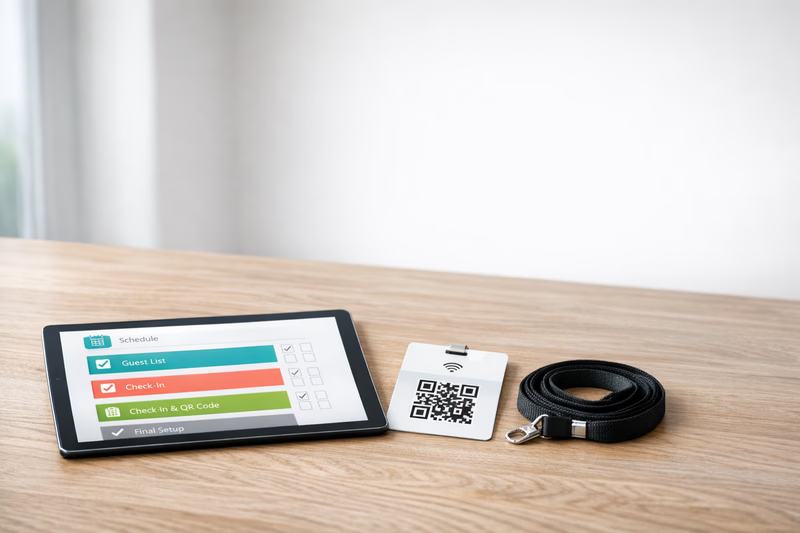
Breaks offer perfect conditions for micro-feedback. It doesn't have to be complex: a visible feedback wall, analog cards with a simple question ("What inspired you today?"), or digital mini-surveys via QR code on coffee cups-all work. The key is low barriers. No one should feel obliged, but everyone should feel invited to help shape the event.
Feedback as part of the experience
Feedback shouldn't be tucked away-it should be visible and encouraging. Displaying answers instantly-on a slideshow or pinned quote wall-creates resonance. Feedback becomes part of the conversation. Rotating feedback cards or stations where attendees anonymously comment on each other (“What impressed you about another guest today?”) boost connection-and insight.
At EventButler you find everything for your event.
Discover new teambuilding ideas